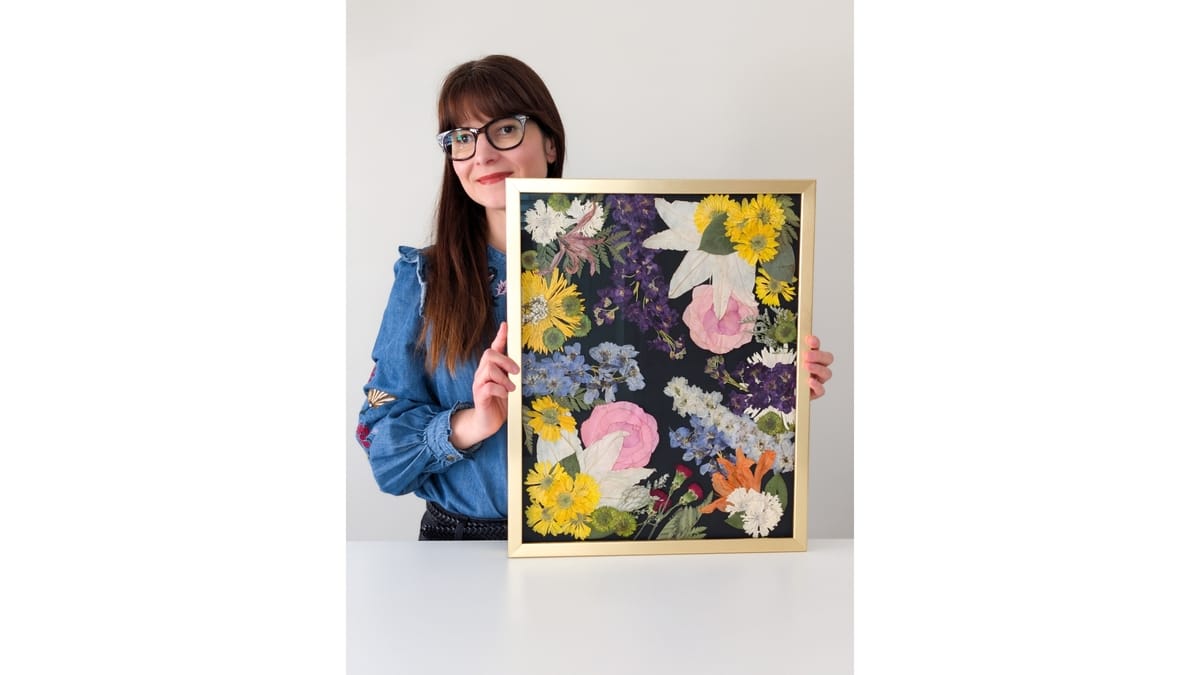
I’d been thinking about this project idea for a long time. I press gorgeous, showy flowers daily in my pro work, but I was craving something simpler, more understated in its beauty.
About a month ago, I noticed a clump of white clover in my backyard. It looked vibrant and joyful, simply perfect for what I had in mind.
I hope this tutorial inspires you to look beyond what screams for your attention. Beauty is everywhere: in the sidewalk crack and in that corner of your garden you never pay attention to. Flower pressing helps us see this kind of beauty.
The simplicity and polished design of the artwork you’ll create make it perfect for gifting, proudly displaying in your home or may even get you started on your journey to selling your creations.
What you’ll need
For pressing:
A flat, stable surface to press on, like a sturdy tray or a setup I describe in the cotton pad pressing method post
Weight: dumbbells, a stack of books, milk jugs filled with sand, anything heavy and evenly distributed
Cardboard sheets if you’re building a makeshift press
For framing:
8x10” solid maple wood frame (it includes all the hardware and can be hung or placed on a desk)
A self-healing cutting mat (optional)
Precision tip applicator bottle (optional but recommended; you can use a brush instead)
A sharp box cutter with a fresh blade
Stainless steel ruler with a cork back (you can use a regular ruler instead, but I recommend this one because it’s virtually indestructible and won’t slide while you cut)
The handmade paper is what makes this project look intentional and elegant rather than thrown together. Pair it with a black archival mat to make the green clover pop in a way that white or cream backgrounds can’t match.
Step 1: Harvest on a dry day
Pick clover after the dew has burned off, never right after rain. Wet leaves bruise and brown faster once they’re pressed. Cut the stems low so you have length to work with later, and grab a mix of young leaves, older leaves, and a few flowers if you want them in the piece.
Clover wilts fast, usually within 15 minutes of cutting, so have your pressing setup ready before you go outside. Harvest close to home, bring everything in right away, and start pressing while it’s still fresh.

Step 2: Press with cotton pads
Lay your cotton pads edge to edge so the seams sit flush, creating one continuous surface to work on. Arrange the leaves flat, without overlapping, and use the space efficiently since clover leaves are small. I cover the full method, including pad layering and how many changes you’ll need, in this post.
For a basic setup: 2-3 cotton pads on the bottom, 2-3 on top, with cardboard underneath for support. Add at least 20 lbs of even weight, ideally distributed across the pressing surface.
The leaves dry faster than the flowers, so check both separately and swap pads after 3 days if the flowers need more time.

Step 3: Wait it out
Give the clover 7-8 days. Check on day 3 or 4. Opening the press early disturbs the leaves before they’ve fully set, and clover is delicate enough that a shifted leaf can tear.
Step 4: Cut your mat board

Measure your mat to fit the frame opening, cutting it 1-2 millimeters shorter to allow breathing room so the piece slides in without forcing.
Cut on your self-healing mat with the steel ruler as your guide. Don’t try to get through the board in one pass: apply light to medium pressure on the first cut, then go over the same line 2-3 more times until you’ve cut all the way through. Foam board, especially, will crack if you push too hard on the first try.
Step 5: Glue and mount
Mark the middle of the edges to guide the placement of your clover. Practice your design until you are happy with it.
Glue each element using tiny dots of glue along the edges and on the stems. My gluing post explains in detail how I do it.

Center the handmade paper on your mounting board and lightly mark the corners with a pencil. Glue only the edges, not the entire surface.

Step 6: Frame it
Clean the glass with a microfiber cloth before you put anything in the frame. Layer in your mounted clover, the mat, and the backing, then secure the hardware. Check the front once more for dust or fingerprints before you call it done.

Clover is the plant most of us pull and toss without a second thought. Pressed and framed like this, it’s proof that the corners we never pay attention to can hold something worth keeping.

Have you pressed something you’d normally yank out of the garden and toss? Tell me in the comments what weed or wildflower turned out to be worth framing.
———
Some links on this page are Amazon affiliate links. If you purchase through them, I earn a small commission at no extra cost to you. I only link to products I personally use in my own studio.